Deep-Space AI Research & Discovery
Our Mission
This ambitious decades-long privately-funded Space 2.0 initiative unites four AI-powered programs and helps to discover new celestial realms, defend our home planet, explore our solar neighborhood, and map the Milky Way objects, delivering exponential leaps in cosmic knowledge and securing humanity’s multi-planetary future in our solar system through relentless innovation and technological courage.
Key Programs
The Moonshot Celestial Discovery program combines AI with global telescope networks to systematically reveal hidden members of the cosmic family: planets, dwarf planets, satellites, TNOs, brown dwarfs, stars, and exoplanets. By cross-correlating billions to trillions of data points across time domains and wavelengths, advanced neural networks can detect the faintest signatures that redefine our understanding of planetary formation and stellar evolution.
Moonshot Celestial Discovery
To protect our only home, the Earth Planetary Defense program deploys AI as humanity’s planetary shield, continuously scanning global observatories and space-based sensors to identify, track, and characterize Near-Earth Objects (NEOs) and hazardous asteroids with precision. It may forecast impact risks decades in advance, enabling rapid deflection mission design and the world’s early-warning system for planetary-scale threats.
Earth Planetary Defense
The Solar Space Exploration program is a discovery engine for the solar system’s hidden frontier and transforms raw sky surveys into a roadmap that accelerates humanity’s next leaps into the outer solar system beyond the Moon and Mars. It will join the global community to collaboratively shape the next generation of asteroid-sample-return, satellite-flyby/landing, and outer-solar-system missions with unprecedented speed, coordination, and scientific return.
Solar Space Exploration
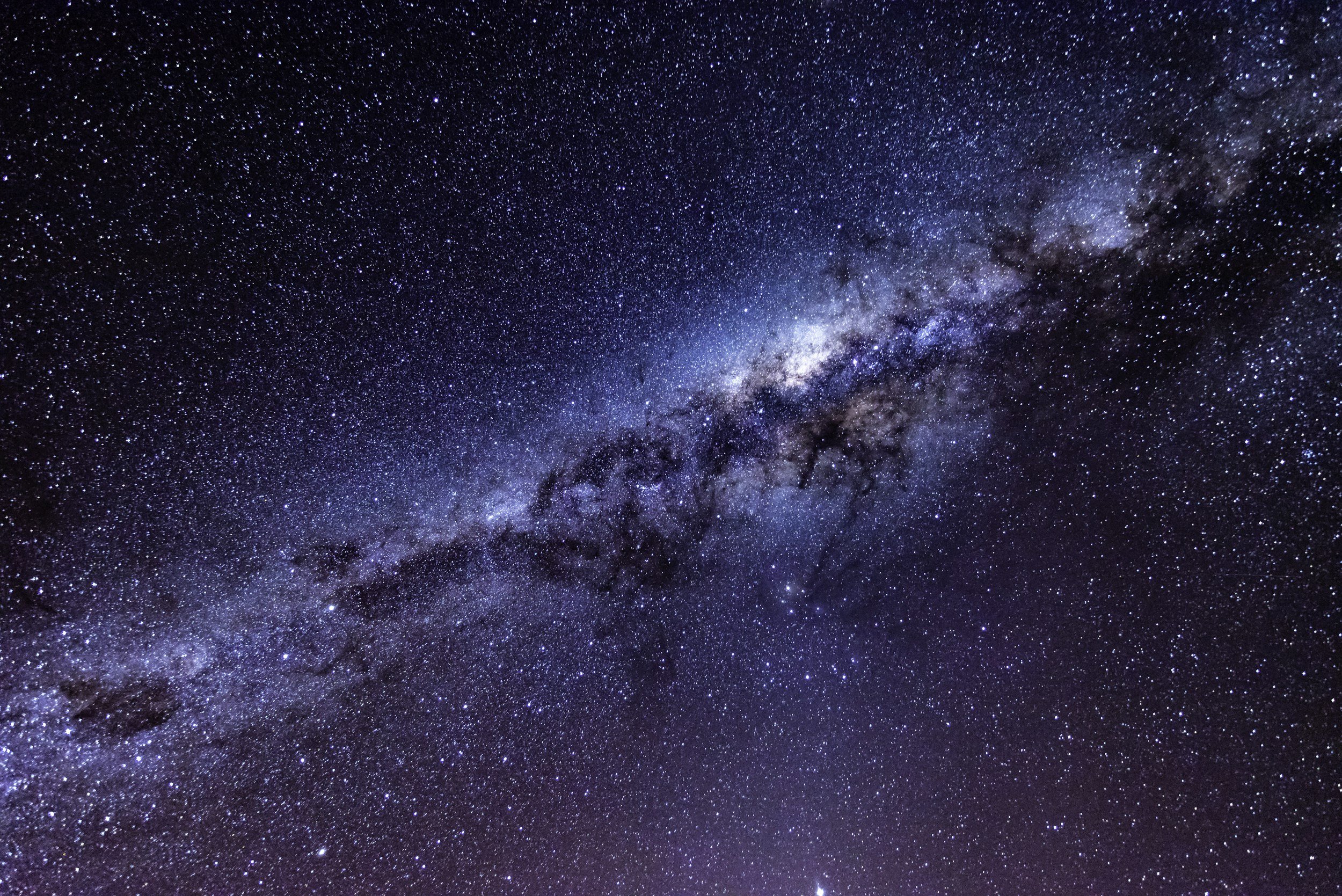
The Galactic Searching & Mapping program helps to construct and maintain the comprehensive digital map of the Milky Way ever attempted, mapping star systems, galactic structures, and interstellar environments with unprecedented fidelity. By continuously ingesting new observations and refining models, the program reveals hidden stellar populations, migration patterns, and potential habitable targets for future interstellar probe missions.
Galactic Searching & Mapping
WISE / NEOWISE
Space 3.4–4.6-12-22 μm MIR
Vera C. Rubin
Land 0.32-1.06 μm Visible
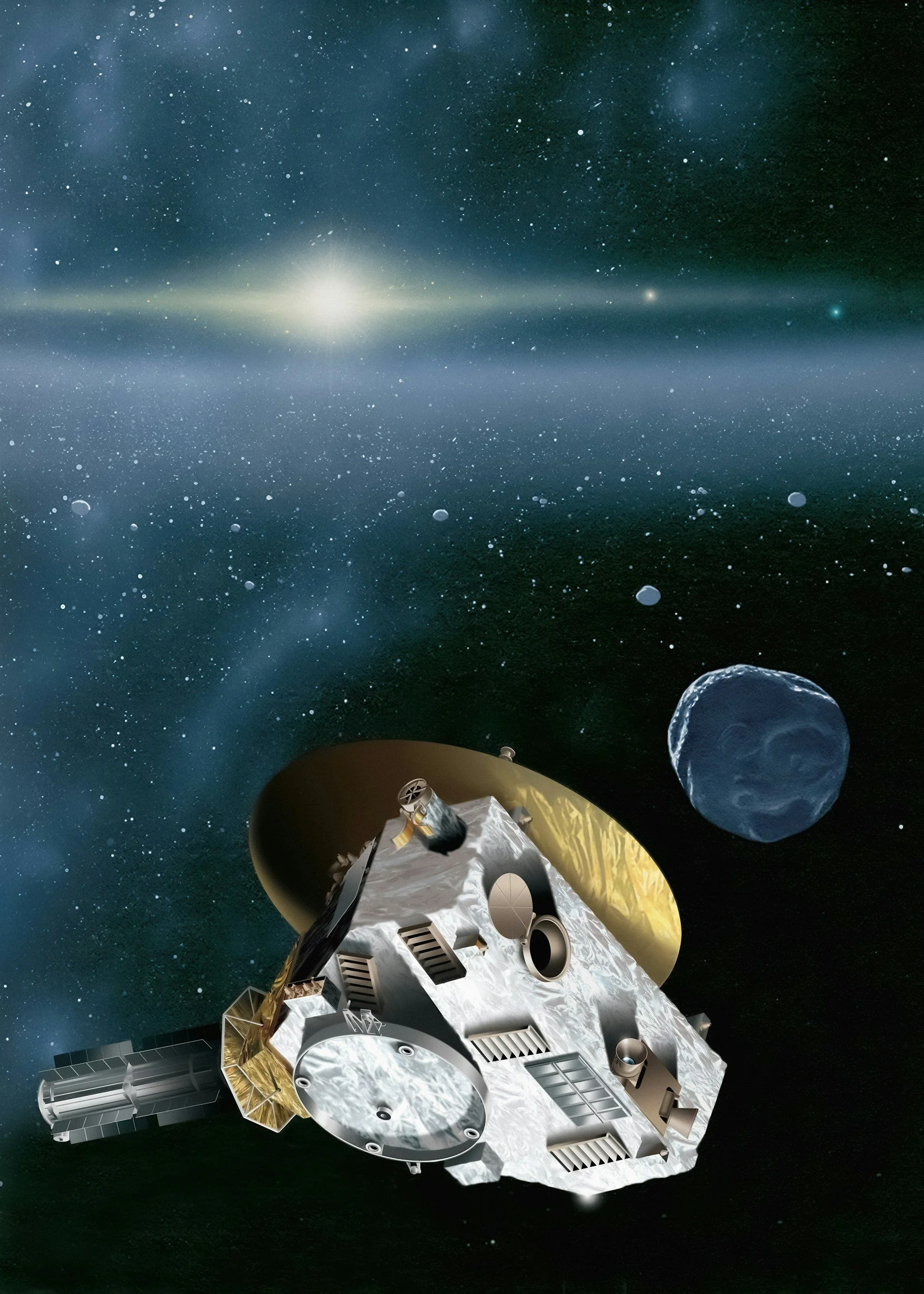
NEO Surveyor
Space 4–5.2 / 6-10 μm MIR
Nancy Grace Roman
Space 0.48-2.30 μm Blue to NIR
"The only way of discovering the limits of the possible is to venture a little way past them into the impossible."
— Arthur C. Clarke